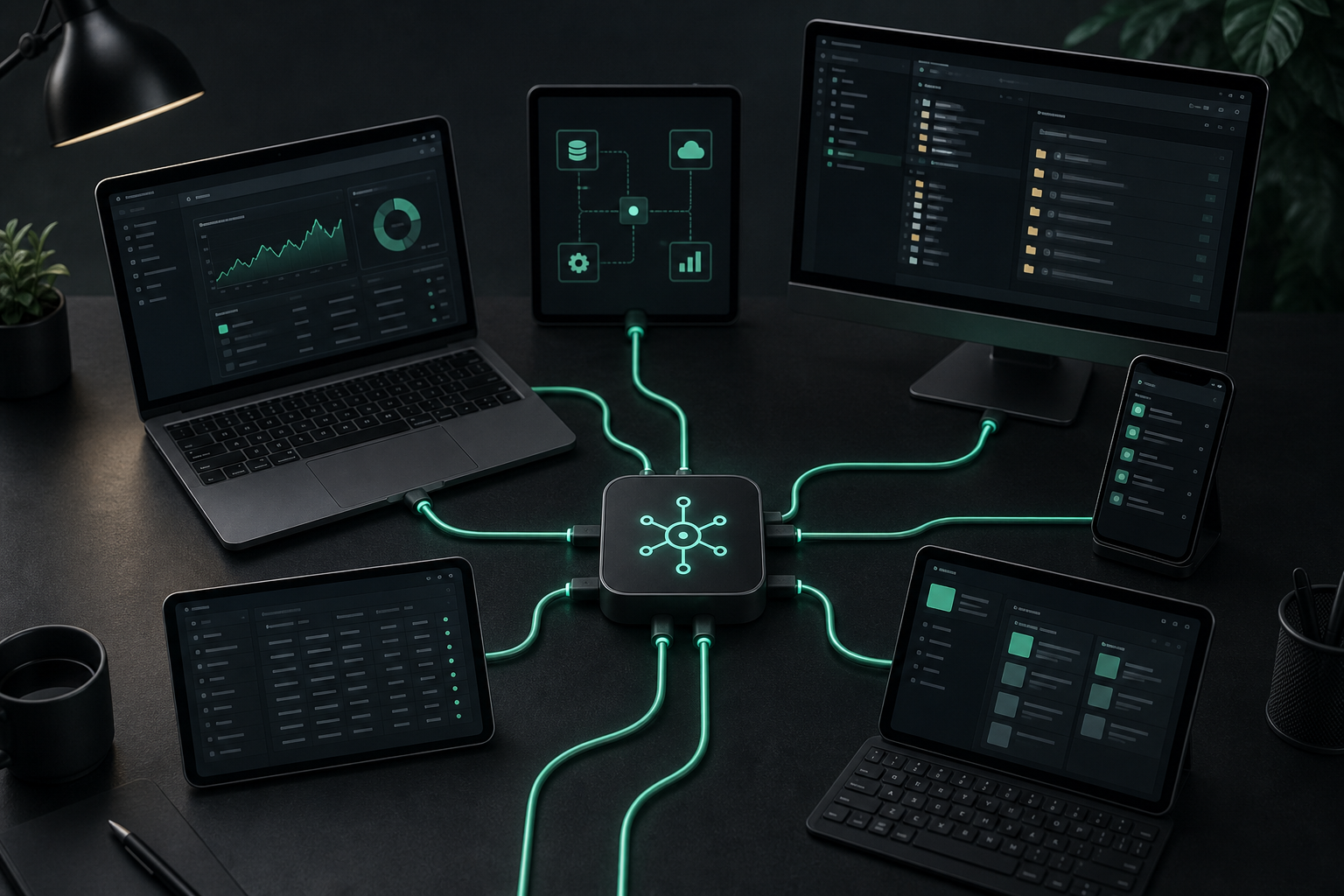
Modern businesses run on integrations: the store talks to the ERP, the CRM talks to the accounting system, the logistics platform talks to WhatsApp. Each connection removes manual work — and adds a credential, a webhook endpoint, and a data flow that somebody needs to secure.
Ask most companies how many applications they run and you'll get an answer. Ask how many API keys exist, who owns them, and what each one can access — silence. That inventory gap is exactly what attackers exploit.
Where integrations go wrong
- API keys with full-account scope doing one narrow job
- Credentials in code repositories or shared chat threads
- Webhook endpoints that accept unsigned payloads
- Ex-employee integrations that were never revoked
- Third-party tools granted write access they never needed
- No logs, so a leaked key is invisible until damage is done
“Your security is the sum of every system you've connected — including the ones you forgot.”
How we build integrations at WLS
Our Integrations service treats every connection as a security boundary: scoped credentials with least privilege, secrets in a vault instead of code, signed and verified webhooks, and audit logs on every data flow. When we wired banking APIs into a lending platform, or payment gateways into LaraCommerce stores, the connection design and the security design were the same conversation.
For clients with existing integration sprawl, we start with an audit — mapping every connection, key, and permission — then consolidate. Fewer, better-built connections beat a web of forgotten Zaps.